Our work
AMR requires more than one solution
Antimicrobial resistance is a complex problem. Our response works across interconnected areas, each with room to grow into its own dedicated programme as the initiative develops.
- 01
AMR Awareness and Education
Making AMR understandable. Making action possible.
We translate complex scientific information into clear, practical, accessible messages for communities, students, patients, families and young people, addressing misconceptions about antibiotics and promoting informed health seeking behaviour.
- 02
Antimicrobial Stewardship
Protecting the medicines that protect us.
Using antimicrobials appropriately, responsibly and only when needed. This addresses self medication, unnecessary use, sharing medicines, and the use of antibiotics for viral illness.
- 03
Infection Prevention and Control
The best infection to treat is the one we prevent.
Preventing infections and their spread reduces the need for antimicrobials. This includes hand hygiene, environmental hygiene, safe care practices, vaccination awareness and safe waste practices.
- 04
WASH
Clean water, safe sanitation and good hygiene are AMR prevention.
WASH is fundamental to preventing infectious disease and limiting the spread of resistant organisms. This includes handwashing, safe water, sanitation, hygiene education and school WASH awareness.
- 05
One Health
One Health. One connected response.
Resistance can emerge and spread across humans, animals, food systems, plants and the environment. A coordinated response recognises the connections between them.
- 06
Environmental Health and Climate Action
The environment is part of the AMR solution.
Pollution, wastewater, pharmaceutical residues, healthcare waste and agricultural activity create pathways for resistant organisms to enter and circulate in the environment.
- 07
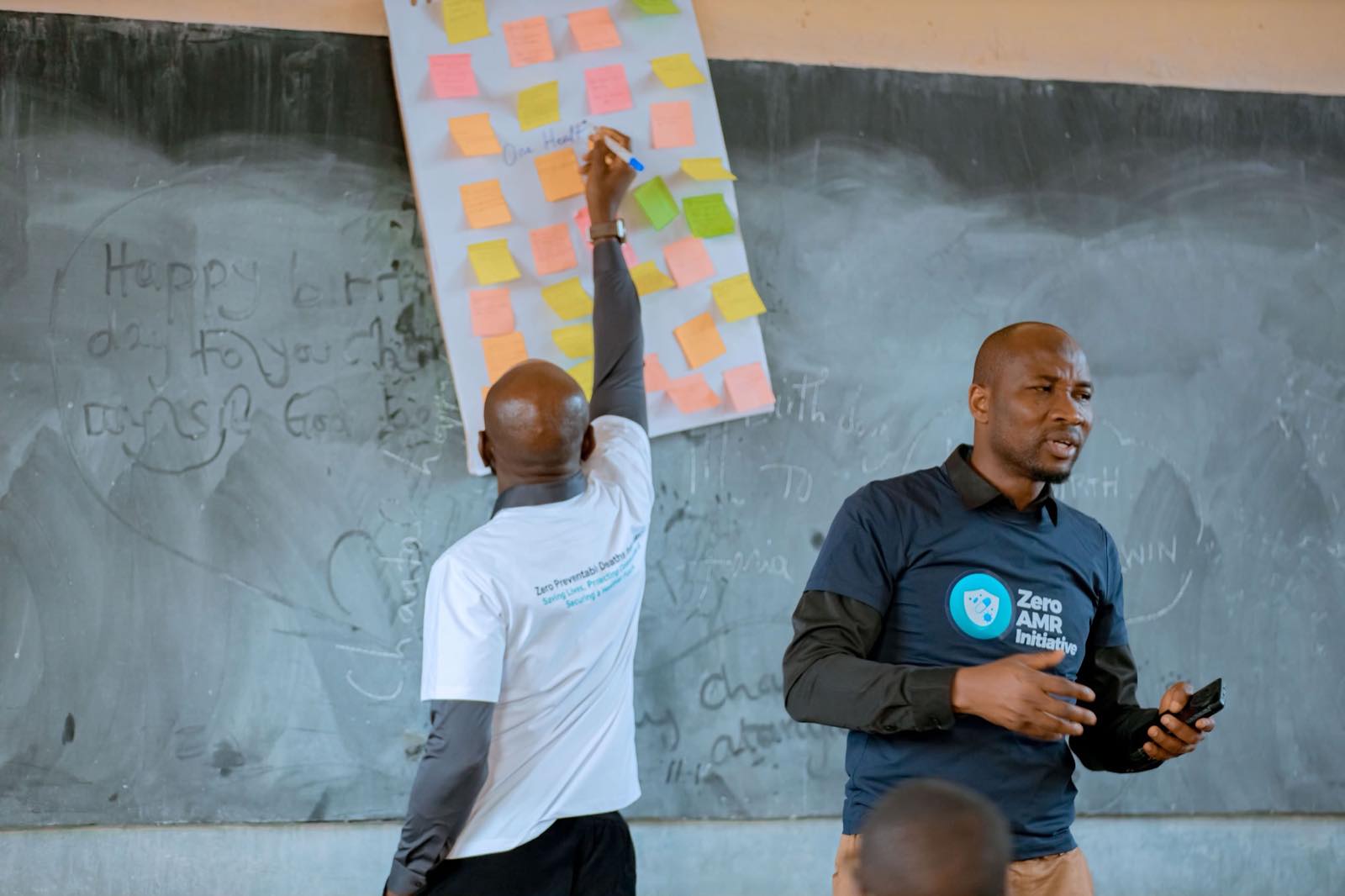
Community Action and Youth Participatory Action Research
Young people are knowledge producers and problem solvers.
Our Youth Participatory Action Research approach places young people at the centre of identifying challenges, generating community evidence, interpreting findings and designing action.
- 08
Research, Evidence and Innovation
Turning questions into evidence and evidence into action.
Community informed data collection, knowledge assessments, behavioural insights and youth led research, because evidence should help communities and decision makers act.
- 09
Policy, Advocacy and Systems Change
Systems determine whether change lasts.
We use community experience and evidence to support informed advocacy on responsible antimicrobial use, access to quality healthcare, IPC, WASH, environmental protection and One Health policy.
- 10
School and University Engagement
Building the next generation of AMR champions.
AMR health clubs, peer education, debates, talks, campaigns, creative communication and innovation challenges.
- 11
Digital and Media Outreach
Taking AMR information where people are.
Infographics, short videos, storytelling, social media campaigns, messaging and radio engagement, to make accurate AMR information accessible and actionable.
See our work in practice
Awareness matters. Action creates change. Evidence helps sustain it.